The Hunchback of Notre Dame- Additional Resources
Written by Colleen Hutt, Well-Read Mom Director of Literary Evangelization
As I was reading The Hunchback of Notre-Dame this past fall in preparation for writing member resources, I stepped outside to take a break. Night had fallen over the lake near our home. The moon glowed softly from behind the clouds. I began to pray, offering gratitude for a long-awaited prayer that was being answered that very day. I thanked God and asked for His continued blessing.
Almost immediately, bells began to ring in the distance.
I felt as though God was speaking to me through those bells, perhaps because I had just been reading about Quasimodo and his deep love for the bells of Notre-Dame. In the novel, bells are more than sound; they are prayer made audible. They mark time, summon souls, and call hearts back to God. Because of Victor Hugo’s story, I was paying attention in a new way. I felt unexpectedly connected to Quasimodo, and drawn back to my work with renewed purpose. I wanted others to feel that same connection: to Quasimodo, to the cathedral, and to what both represent.
Quasimodo is, above all, a bell ringer. He loves the bells, even though they cost him his hearing. Still, the bells must be rung. They remind us that our lives, too, are meant to be lifted up as prayer and offering.
Quasimodo’s very name carries meaning. He is named for the day of his birth: Quasimodo Sunday, the first Sunday after Easter. Quasi modo means “as newborn babes” or, more loosely, “half-made.” The name comes from 1 Peter 2:2-8:
“Like newborn babies, crave pure spiritual milk, so that by it you may grow up in your salvation¦ As you come to him, the living Stone, rejected by humans but chosen by God and precious to him, you also, like living stones, are being built into a spiritual house¦ The stone the builders rejected has become the cornerstone.”
Quasimodo is “half-made, unfinished, rejected, yet essential (like us!). Like the stones of the cathedral itself, he reveals something about how God builds His dwelling place.
Hugo’s novel opens a window into French society and presumes some familiarity with European, and especially French, history. Because many Well-Read Mom members are American, it can be helpful to offer a few broad historical strokes to situate the novel properly. The relationship between Church, monarchy, and state in France was far more complex than we often realize.
The Middle Ages began with the fall of Rome in 476 and lasted nearly a thousand years. The early medieval period was marked by instability, wars, disease, population loss, and the collapse of cities and education. Books survived largely because they were preserved in monasteries. Europe went more than three centuries without an emperor until Christmas Day in the year 800, when Charlemagne was crowned Holy Roman Emperor by Pope Leo III.
Charlemagne is a crucial figure in this story. A statue of him still stands outside Notre-Dame today. Often called the “father of Europe,” he united much of modern-day France, Germany, and Italy, strengthened the alliance between Church and monarchy, supported education, and brought stability that allowed culture and faith to flourish. During his reign, the Cathedral of Paris was Saint-Étienne, located on the small island where Notre-Dame now stands, alongside the royal palace. From the very beginning, the Church and crown stood side by side.
Over time, this alliance became the ancien régime, the feudal system that governed France until the French Revolution. Society was rigidly divided into three Estates: the clergy, the nobility, and everyone else. While this system initially provided order and protection, inequality grew severe. The vast majority of the population bore the economic burden, while the clergy and nobility were exempt from taxation. Tensions mounted.
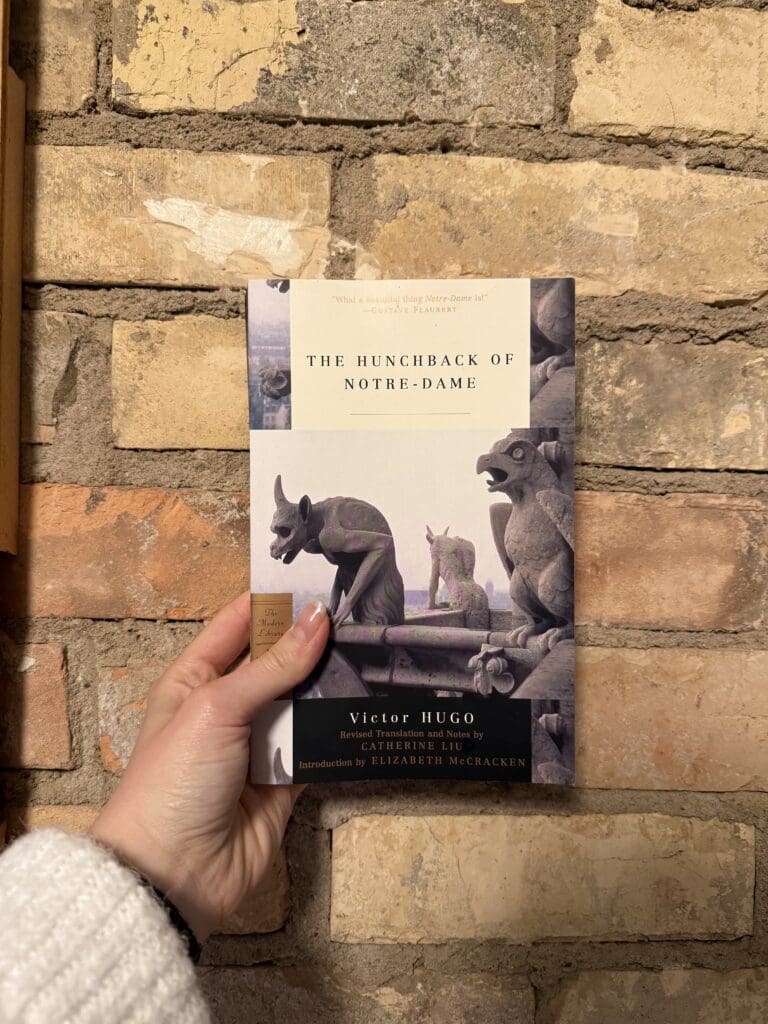
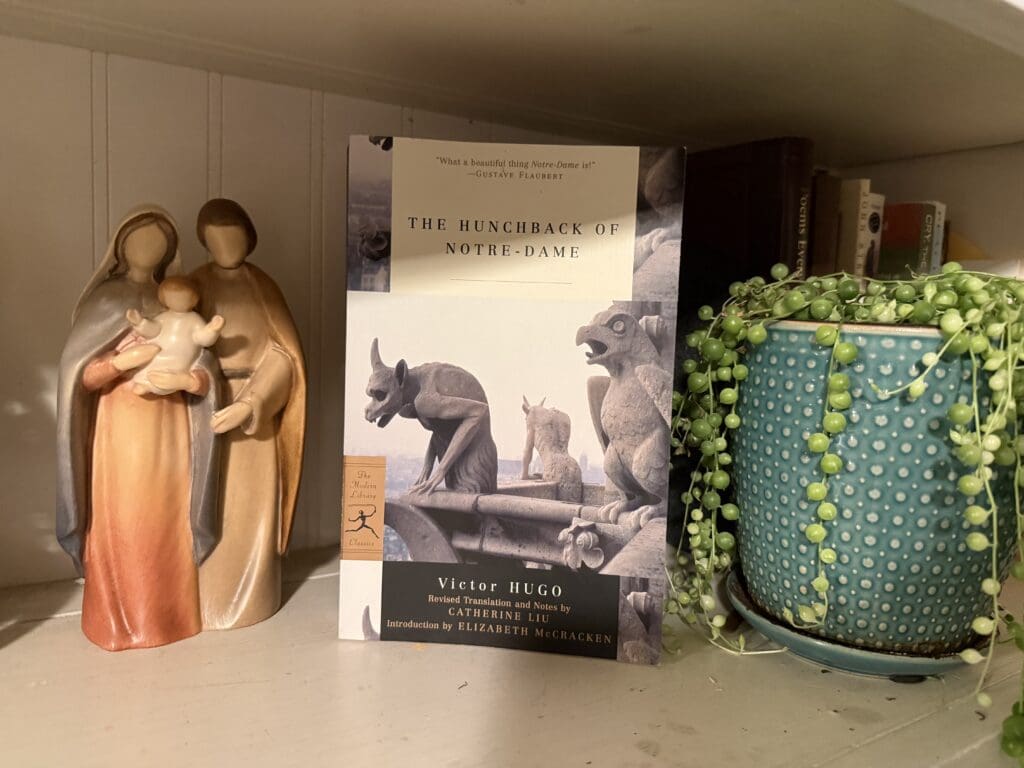
Notre-Dame de Paris itself was built during the high medieval period, an age that gave rise to Gothic architecture. Flying buttresses, vaulted arches, and soaring windows allowed light to flood the interior. Light symbolized God’s presence, “Let there be light” were the first words spoken in Genesis. Cathedrals were meant to lift the eyes and the soul upward. They were “stories in stone,” proclaiming salvation to a largely illiterate population. Notre-Dame was not just a building; it was a beacon.
The title Notre Dame- Our Lady- was itself a noble one. Mary is Queen of Heaven. This royal imagery, however, later made the cathedral a target.
As the medieval world gave way to the Renaissance and then the Enlightenment, culture shifted dramatically. Reason was exalted, often at the expense of faith. By the time of the French Revolution, resentment toward both monarchy and Church exploded. A grim saying I learned from a tour guide back in 2015, sums up the final Bourbon kings: “Louis XIV started it all, Louis XV enjoyed it, and Louis XVI paid for it all.”
During the Reign of Terror, the Church was violently persecuted. Notre-Dame was desecrated, looted, and stripped of its statues. It was transformed into a “Temple of Reason” and later a warehouse. Faith was being attacked by over-zealous revolutionaries eager to stamp out faith from civic life.
It is into this devastation that Victor Hugo writes Notre-Dame de Paris. Though he was still Catholic at the time, Hugo stood at the crossroads of France’s tensions between revolution and tradition, faith and progress. His novel is inseparable from the cathedral itself. Notre-Dame is not merely a setting; it is a living symbol of memory, identity, and endurance.
As you read, pay special attention to Book III, Chapters 1 and 2; Book V, Chapter 2 (“This Will Kill That”); and even Book VIII, Chapter 4, titled Lasciate Ogni Speranza, a direct reference to Dante’s Inferno. Hugo invites us to reflect on what is lost when we sever ourselves from history, faith, and beauty, and what might yet be restored.
Like the bells that rang unexpectedly in the night, this novel calls us to listen more closely- to history, to faith, and to the quiet ways God still speaks.
Resources used to write this blog:
- On Saint Louis
https://en.wikipedia.org/wiki/Louis_IX_of_France#:~:text=Louis%20IX%20holds%20the%20distinction,of%20all%20subsequent%20French%20kings.
https://www.thoughtco.com/rulers-of-france-840-until-2015-3861418 - Festival of Fools
https://ucatholic.com/blog/when-clergy-became-fools-and-chaos-ensued-the-bizarre-medieval-feast-of-fools-the-church-had-to-ban/ - Why Did He Write This?
https://www.wbur.org/npr/713822050/how-notre-dame-vast-symphony-in-stone-weaves-its-way-through-parisian-history
https://artifactstravel.com/notre-dame-cathedral-french-revolution-temple-of-reason/

About Colleen Hutt
Colleen Hutt graduated from the University of Notre Dame’s Program of Liberal Studies. She has worked as a Director of Religious Education in Venice, FL and as a Pastoral Associate for Adult Formation in Whitefish Bay and Fox Point, WI. She and her husband, Colin, have five children and one grandchild. She is an active parishioner of St. Monica Parish in Whitefish Bay. She continues to help with adult and youth formation, Eucharistic Adoration, leads Church tours, contributes to St. Vincent de Paul meal program, mentors engaged couples and is passionate about supporting the Women’s Care Center in Milwaukee. She leads two Well Read Mom groups currently and serves on the WRM national committee and is the WRM Director of Pilgrimage. She loves learning and growing in her faith and tries to approach the struggles of modern life from the heart of the Church.
About Well-Read Mom
In Well-Read Mom, women read more and read well. Our hope is to deepen the awareness of meaning hidden in each woman’s daily life, elevate the cultural conversation, and revitalize reading literature from books. If you would like to have us help you select worthy reading material, we invite you to join and read along with us. We are better together! For information on how to start or join a Well-Read Mom group visit our website wellreadmom.com