The Gift and Struggle of Community
Written by Maurizio (Riro) Maniscalco
The following article is adapted from an interview between Maurizio Maniscalco and Chaim Potok that first appeared as “Telling the Mystery,” Traces No. 1, January 2000. Visit www.clonline.org/en/publications/traces. It is used with permission.
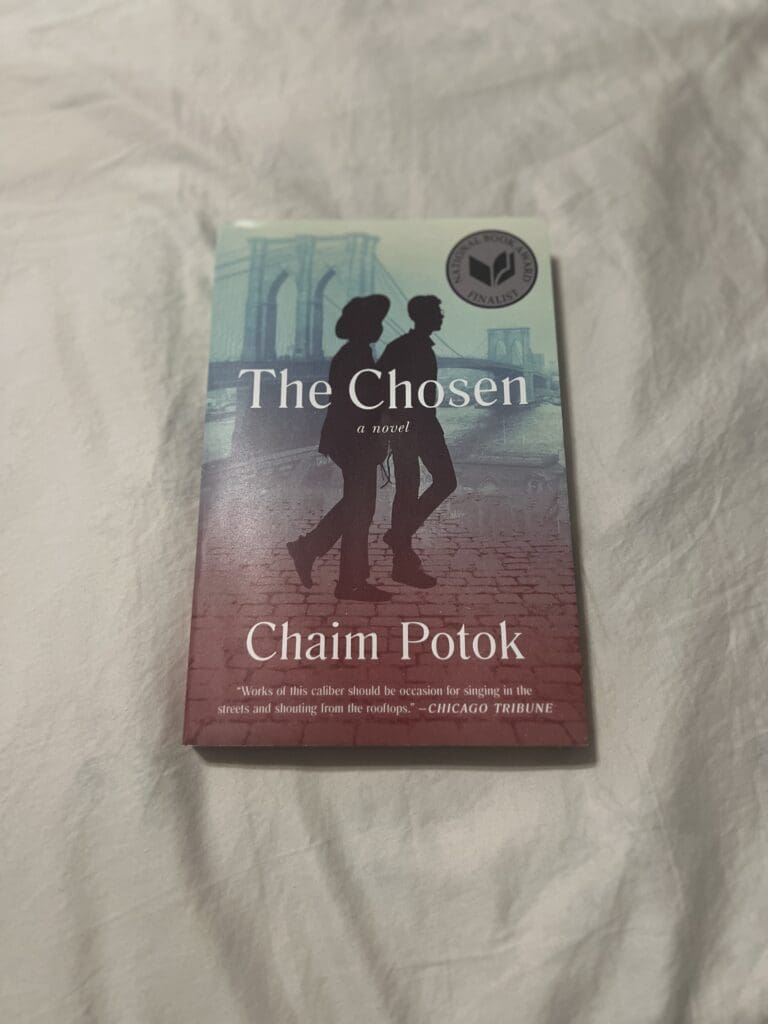
More than twenty-five years ago, Maurizio (Riro) Maniscalco reached out to acclaimed Jewish-American writer Chaim Potok for an interview. Though the two had met several times—and even shared a meal together—Maniscalco hesitated to call the author of The Chosen. “First of all, Potok is a very famous writer,” he related. “Many of his books (The Chosen, Davita’s Harp, and those about Asher Lev) are practically required reading for all American students. Potok is also a very busy person, who works a lot, and the work of writing is a jealous god.”
Potok graciously accepted the request to be interviewed for Tracce (Traces) magazine. He shared his personal journey about being true to oneself as a writer, his desire to teach, and the challenges in American education today.
Maniscalco describes how Potok, “inspires a certain awe just by looking at him, with his paternal but always thoughtful air, his penetrating gaze, and his voice that seems to come from afar. A bit like how we imagined those father figures he described so profoundly and painfully in his stories.”
As a boy Potok loved to draw, but his father wasn’t very happy about it. Since he needed to express himself, he turned to writing. “I write because, during my adolescence, I happened to read books that influenced me a lot and that taught me to create worlds from my imagination,” said Potok. “This is what I try to do: I try to create worlds, to give meaning to worlds using words that come from my imagination.”
The “spark” that inspires his writing is difficult to describe, he said. “That will, that hunger to somehow give form … there’s a mystery in it ….”
At times, he said, things can get difficult. “And that means you have to reflect on it, step away from it for a while….”
Though his most well-known books, including The Chosen, came out without interruptions, like a continuous flow.
“Characters like Danny Saunders and Asher Lev are searching for fulfillment, but there doesn’t seem to be enough space for them within the community.”
Community and its inherent tensions are an important theme in Potok’s work. “Most human beings are born into a community. We all seek the fulfillment of our authentic individuality, of our self. This means that every individuality is different from the others within the community. Thus, there will be tensions. The father is invariably seen as the representative figure of values, and the leader of the community. The Rabbi, if it is a religious community, is the ultimate figure of authority in the community itself. You will find yourself in conflict with your father, with your Rabbi, with your teachers as you try to give voice to yourself, as you try to assert yourself. But if the authoritative figures are sympathetic to you, and if you are lucky, then you can succeed, to have your voice and remain in the community.”
Potok experienced this tension when he left his fundamentalist world to move towards another understanding of Jewish tradition, he said. He was led a by “The realization that I couldn’t write honestly and remain within a fundamentalist and literal understanding of the Jewish tradition.”
Writing, however, “is a very solitary occupation, and you can forget that outside the study where you write there is a world that is pulsating.” Teaching served an important means for him to bring himself back into the world, “especially the world of young people.”
Potok defined himself as Jewish and American. “For me, being American means participating in political life, being aware of what is happening around me, participating in and contributing to this community, teaching. In general, doing the things that you do that allow you to participate in the life of the democratic community. In the United States, the question is also whether the country is truly one or many, where the country is going … we all talk about these things nowadays.”
Regarding educational challenges such as school shootings, Potok said, “There is much less violence in schools today than there was about ten years ago. What is happening is that the school system in the American suburbs, the school system of “those who are well-off,” includes all kinds of people, and sometimes things simply go wrong… but I am concerned about the problem of teaching values in schools, and how this happens. Schools are increasingly attentive to this and are beginning to address the problem of how to communicate values without necessarily instilling this or that religion. This is becoming a major topic in the education debate in the United States. Certainly, there’s no doubt that the problem exists. There’s no doubt that the culture with which young people are confronted is essentially a culture that doesn’t offer positive values. To a large extent, it’s violence. I’m talking about culture in a broad sense: cinema, television, video games. Most of it is violent, erotic. And then the fact that both parents nowadays have to work means less care for their children, less attention paid to their children as they grow up. This generates all kinds of problems in society, especially among teenagers. The school shootings have brought our attention to the problem, and there are many people who are dedicating themselves to this issue.”
A lack of fatherhood and motherhood contribute to the problem. “…Parents are all worried and preoccupied with their careers and double jobs. Everyone seems overwhelmed by contradictory values, everyone is looking for some kind of balance. And it’s really difficult.”
There is a way to begin again. “First of all, we must recognize that there is a problem. I believe that a general recognition of the fact that the problem exists will eventually lead to some solutions.”

About Maurizio (Riro) Maniscalco
Maurizio (Riro) Maniscalco is the president and one of the founders of New York Encounter, an annual three-day cultural event in the heart of New York City, offering opportunities for education, dialogue, and friendship. Born and raised in Italy, Maniscalco moved to the United States with his wife and kids in 1994 and lived in NYC until 2020. After a career spent mostly in Human Resources (both in Italy and in the U.S.) and managing a language school he had established in New York, he now lives in Minnesota, writing books and songs together with articles for an internet newspaper (IlSussidiario). He has recorded multiple CDs with The Bay Ridge Band and with his friend Jonathan Fields.
About Well-Read Mom
In Well-Read Mom, women read more and read well. Our hope is to deepen the awareness of meaning hidden in each woman’s daily life, elevate the cultural conversation, and revitalize reading literature from books. If you would like to have us help you select worthy reading material, we invite you to join and read along with us. We are better together! For information on how to start or join a Well-Read Mom group visit our website wellreadmom.com