The Persuasion of Authors
Written by Kathryn Heim
My sister and I are both voracious readers, a trait inherited and encouraged by our parents and shared by most of our family, though our tastes somewhat differ. As a writer and former English major, my reading is as much for work as it is for pleasure, and even the books that I read for fun still usually have some meat to them. My sister, who is a busy mom of four kids under the age of fifteen, reads primarily for recreation and is deep into the Romantacy genre (Romance + Fantasy); she is not necessarily looking for complex moral themes or deep philosophical questions, but is still a discerning reader when it comes to quality.
One topic we will both opine on, however, is poorly written female characters by obviously male writers.
This is not to say that all male authors are incapable of accurately portraying women, or that female authors are immune to these written crimes against their own sex. However, as women, it is a bias and bigotry that we can usually spot without even looking for it.
When an author says little beyond a female character’s physical description, or when all the female characters seem to share the same traits, whether positive or negative, it makes one wonder how many actual women the author knows.
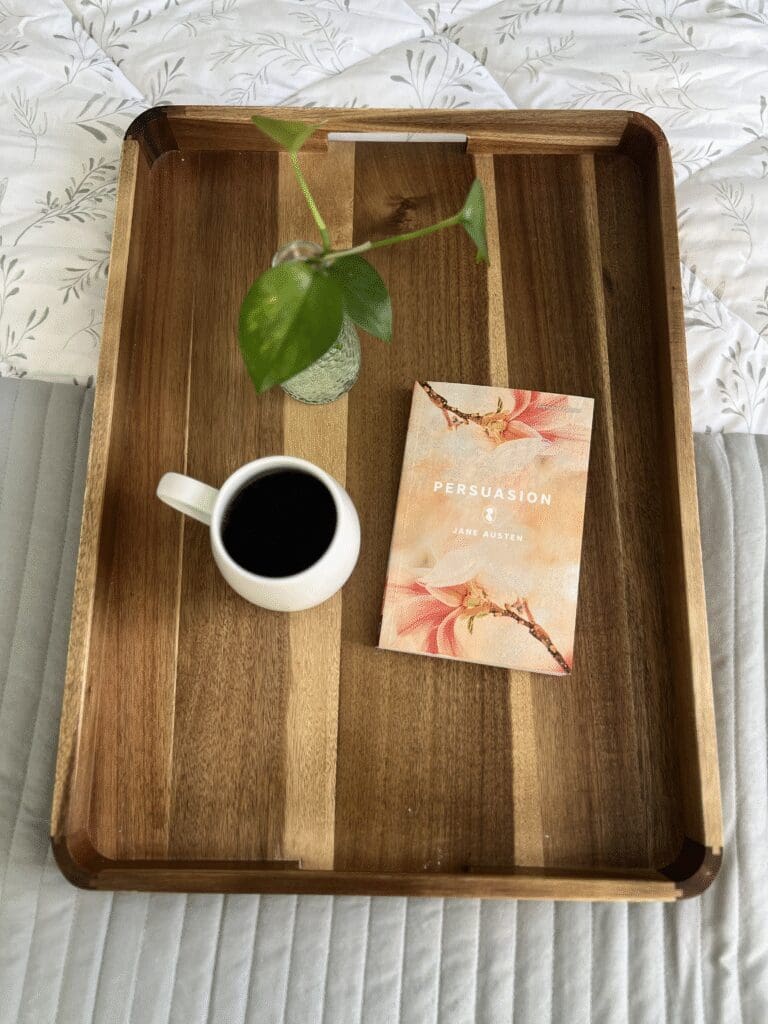
It was with a sense of solidarity that I discovered even Jane Austen herself felt this frustration of poor representation. In reading Persuasion, there’s a conversation between the book’s heroine, Anne Eliot, and the kindly Captain Harville that really struck me. They are discussing whether it is men or women who are the more inconstant ones regarding love, and Captain Harville is inclined to turn to literature to back up his own argument but quickly anticipates Anne’s rebuttal.
“If I had such a memory as Benwick, I could bring you fifty quotations in a moment on my side the argument, and I do not think I ever opened a book in my life which had not something to say upon woman’s inconstancy. Songs and proverbs, all talk of woman’s fickleness. But perhaps you will say, these were all written by men.”
“Perhaps I shall. Yes, yes, if you please, no reference to examples in books. Men have had every advantage of us in telling their own story. Education has been theirs in so much higher a degree; the pen has been in their hands. I will not allow books to prove anything.”
There’s a dear irony in Jane Austen herself writing these words, she who was able to give such voices to her heroines as to still be wildly popular two hundred years after her death. Yet it’s also true that her books first had to be published anonymously, because writing was not deemed a respectable employment for a woman of her class and she was forced to work against societal norms to bring life to her ladies.
But this conversation between Anne Eliot and Captain Harville brings up questions worth discussing: how much credibility do we give a work of art depending on who the artist is? And what can we learn from even flawed works?
As a woman, it’s easy for me to spot these types of defects in male writing, but it has also caused me to stop and think about what other biases I might be missing. An important aspect of reading deeply is to not simply take things for granted, not to assume that a narrator is reliable or that their perspective is accurate. Sometimes an author might intentionally distort the views of a narrative to make a particular point, but sometimes it is their own worldview that has blind spots.
One of the things that makes literature so valuable is how it can introduce us to perspectives and lives different from our own, and sometimes we can learn from writers in ways that perhaps they did not even intend.
During this Year of the Teacher, we are looking at the different lessons and different ways that we can learn from the stories we read, but we should also pay attention to the teachers themselves.
If a teacher is biased, shouldn’t we know that before accepting their teaching wholesale or believing that how they present the world is accurate? Is an author writing from their own true experience, in which case we might need to reevaluate our own assumptions? Or are they writing from ignorance and prejudice? Are they making assumptions and furthering unfair stereotypes? We need only look at Austen’s most beloved novel, Pride and Prejudice, to see how a person’s personal inclinations can create a bent perspective.
No writer is capable of capturing every perspective or portraying the world with complete objectivity, and we shouldn’t expect them to. But this doesn’t mean that we can’t still learn from these limited views. I am blessed to be married to a good man, who sees me as a whole person, body and soul and flaws galore, and who loves and values every aspect of me. But it’s important for me to remember that many women, and many people in general, are not being valued in this way. Every person, every experience, and every perspective has something that we can learn from, even if it’s by way of contrast to the good examples we would like to see.
Jane Austen saw the flaws in male viewpoints and set out to correct them, thus creating a host of beloved female characters that are true to life. It is often the case that challenges and the recognition of injustice are what spurs true and lasting innovation and reform. Acknowledging where we and others fall short of the ideal can be the first step to taking a wider perspective.
About Kathryn Heim
Kathryn Heim is an author, wife and mother living outside Salisbury, NC, where she gardens, raises chickens, experiments with cooking, and reads too many books. Find her work at www.kathrynheim.com.
About Well-Read Mom
In Well-Read Mom, women read more and read well. Our hope is to deepen the awareness of meaning hidden in each woman’s daily life, elevate the cultural conversation, and revitalize reading literature from books. If you would like to have us help you select worthy reading material, we invite you to join and read along with us. We are better together! For information on how to start or join a Well-Read Mom group visit our website wellreadmom.com