
Learning to See Again
Written by Naomi Ringhand
We shall not cease from exploration / And the end of all our exploring / Will be to arrive where we started / And know the place for the first time. 1
T.S. Eliot, Little Gidding
Some years ago, at a Northern Minnesota parish pancake breakfast (nothing says universal like a parish pancake breakfast), I sat across the table from an elderly gentleman named Leroy. He told me how his adult children, who lived all across the country, had come to visit him for his birthday. Leroy has the most striking blue eyes, which lit up as he told me about how one morning, they had all gone down to a rocky beach along the shores of Lake Superior in Duluth, where he had grown up. He sat on a bench with his son as his grandchildren played.
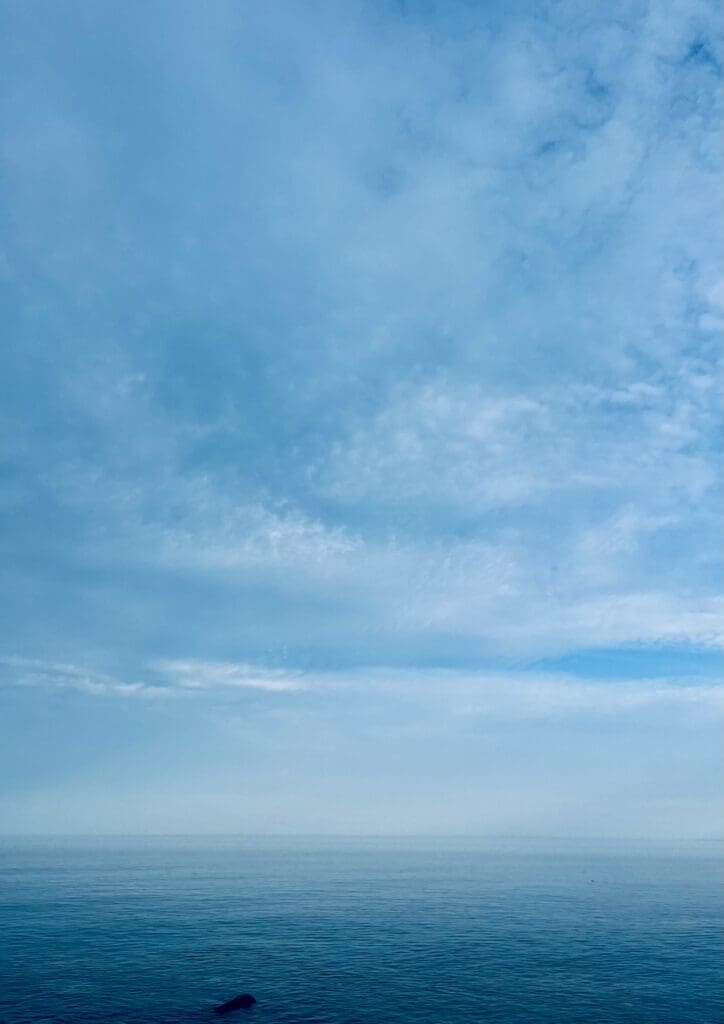
Eyes shining with tears and voice quavering, he recounted how, looking out over the water— the lake he had seen hundreds of times since he was a boy—he was struck by its beauty in a way he never had been before.
“It was like I had never seen it before… It was beautiful… I had seen it all my life, and suddenly it was beautiful.”
It was striking: this tough Iron Range man sitting before me, moved to tears by the lake whose beauty had been veiled by familiarity a moment earlier.
Beauty had called to him, had reawakened him to sight. He saw the world anew, fresh as the first dawn of creation, with the wonder of a child. As he looked out over the waves, that endless, glittering blue that had been a companion his whole life, wonder allowed him to see it “for the first time.” Even as he recounted the experience, he became youthful, filled with life. I will carry the memory of his face, of all the light in his eyes, as a treasure and witness my whole life.
Wonder awakens us to beauty, and beauty to the presence of Love who meets us in the here and now. As Catholic poet Dana Gioia says, the whole world is sacramental, “shimmering with signs of sacred things,” and “mysteriously charged with the invisible presence of God.”2 Beauty tells us the truth about reality; it draws us into communion and gives us the capacity for joy.
I read the first chapters of So Big on the rocks of that same beach. As Selina looked out over rows of cabbages, beets, and carrots, seeing in them jade, burgundy, chrysoprase, and porphyry, I looked out over the jewel of Lake Superior, set in stone, and thought of Leroy. They were the same. They looked out on the world and saw something different, saw deeper into reality. The way they saw opened them to something new, something that filled them to the very brim with joy, and courage, and light.
How is this possible? How can we learn to see again for the first time?
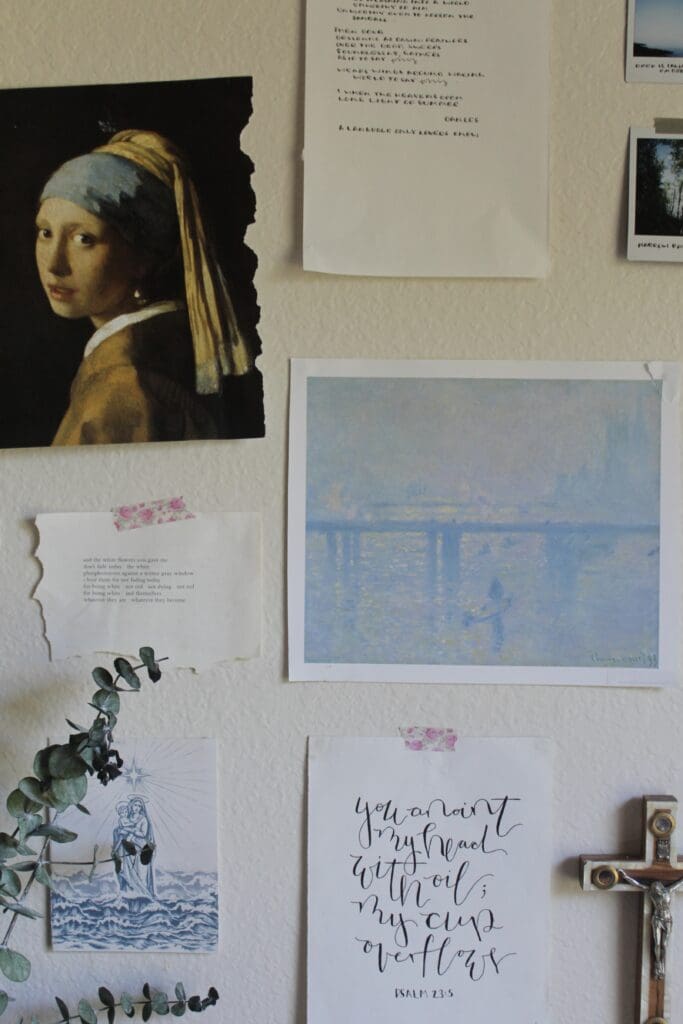
While Klaas Pool saw crops to be cultivated and tasks to accomplish, Selina looked out over the fields and saw jewels, saw beauty, because the clay of her imagination had been shaped by the strong, gentle hands of literature. She looked out on the world through the lens of poetry. Ferber draws our attention to this fact, reminding us that “Selina… had read Byron at seventeen.”3 Literature taught Selina to see the world through the lens of beauty and meaning, not merely utility and fact. What she had read became part of her, part of how she saw the world, and it gave her access to a deeper reality. It allowed her to see “for the first time.”
When I was a baby English major at Franciscan University, I would visit the former teacher, now dear friend, who first converted me to literature whenever I was back in Minnesota. At the end of each visit, he would unfailingly send me on my way with a book, a poem, a song—something for the journey.
This is what literature does. It places in our hands a word, a character, an image, an idea to walk with us on the journey, to accompany us in this life, and we get to keep that forever. We may struggle through a book; it may never be our favorite. Yet, it becomes a part of us. It begins to shape how we see. We get to walk through life hand-in-hand with these companions who help us see the world again: the stars shining above Alyosha in The Brothers Karamazov; Péguy’s little girl Hope; the eyes of Dante’s Beatrice; the whispered “Timshel” in East of Eden, Zagajewski’s light, that “strays and vanishes/ and returns.”4
We get to be transformed by literature because, through it, we allow ourselves to be shown the world through other eyes. We learn to see again, and again, and again. The humility of reading opens us to receive— from others, from these words written for us, from the beauty before us in ordinary things.
This receptivity— this openness to reality, to beauty, to others, to love— is part of the meaning and mystery of womanhood. As I enter into this Year of the Woman, it is this wonder I desire most deeply: a wonder that even in the face of hardship, suffering, and loss allows me to remain open to the world, to see “for the first time,” and, like Selina, like Leroy, be amazed, dazzled by beauty—to be swept off my feet by Love who comes to meet me here in this moment, in the places I have walked a thousand times, in the cabbage field of my humanity, in the endless, glittering blue.
About Naomi Ringhand
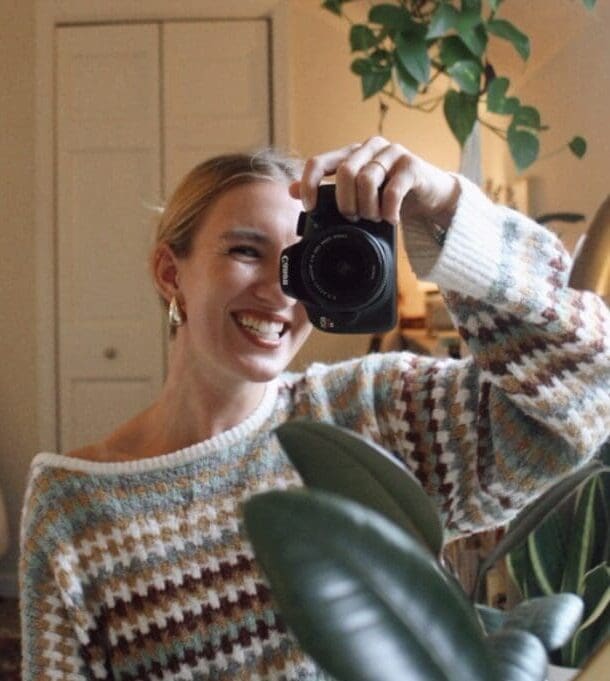
Naomi Ringhand—Director of Membership for Well-Read Mom— grew up in Crosby, MN with her nine brothers and sisters, and studied English Literature at Franciscan University of Steubenville. She now lives in beautiful Duluth and loves the lake almost as much as it loves her. She enjoys sitting by the water, looking at the stars, adventuring in the wilderness, slow evenings on the porch, poetry, solving the mysteries of life around the fire with her friends, playing music and painting, swing dancing, and she will (shamelessly) take every opportunity to play dodgeball with kindergartners.
About Well-Read Mom
In Well-Read Mom, women read more and read well. Our hope is to deepen the awareness of meaning hidden in each woman’s daily life, elevate the cultural conversation, and revitalize reading literature from books. If you would like to have us help you select worthy reading material, we invite you to join and read along with us. We are better together! For information on how to start or join a Well-Read Mom group visit our website wellreadmom.com
- Eliot, T. S. “Little Gidding.” In Four Quartets. London: Faber and Faber, 1944. ↩︎
- Gioia, Dana. “The Catholic Writer Today.” First Things, December 2013. ↩︎
- Ferber, Edna. So Big. 1924. Reprint, New York: Harper Perennial Modern Classics, 2000. ↩︎
- Zagajewski, Adam. “Try to Praise the Mutilated World.” Poetry Foundation. Accessed October 21, 2026. ↩︎
